


Differences Between Multimode and Single-Mode Fibre | FTL
Which Fibre Should You Choose for Your Events and Installations?
Fibre optics is the world’s most advanced and efficient transmission medium for carrying data at high speeds with minimal signal loss. Within this technology, there are two main types: SingleMode fibre and MultiMode fibre.
Although both transmit light through a glass or polymer core, they differ significantly in their construction, optical behaviour and applications. Below, we examine their main characteristics and typical uses.


Multimode fibre is a type of optical transmission cable that allows multiple light rays, or modes, to travel simultaneously through its core. This is possible because of its larger core diameter, typically 50 or 62.5 microns. As a result, multimode fibre is highly compatible and efficient over short and medium distances.
This design enables cost-effective signal transmission across short and medium cable runs, as the optical sources used—such as VCSELs or LEDs—are more affordable and efficient than the high-precision lasers required for single-mode fibre.
Classification According to the ISO 11801 Standard
Multimode fibres are divided into five categories standardised under ISO 11801: OM1, OM2, OM3, OM4 and OM5, where “OM” stands for Optical Multimode. This classification is based primarily on modal bandwidth and performance in high-speed transmission applications. Cable colours used in installations should comply with the TIA-598-C standard.
Evolutions and Applications by Category
OM1 / OM2: For many years, these fibres were widely used in Ethernet networks ranging from 10 Mbit/s to 1 Gbit/s, mainly because of their compatibility with LED transmitters. They are still found in legacy networks and cost-effective short-distance installations.
OM3 / OM4: These are laser-optimised multimode fibres (LOMMF) designed for use with VCSEL transmitters and capable of operating at 10 Gb/s and above. They enabled the natural evolution towards 40 and 100 Gb/s networks. They are ideal for Full HD and 4K converters, as well as for newer protocols such as SMPTE ST 2110. They are now widely used as a current standard because they can carry virtually any laser-based signal, including signals generated by SingleMode transceivers when compatible equipment is used.
OM5: Introduces support for wavelength-division multiplexing (WDM) across the 850–950 nm range, enabling parallel multichannel transmission at 100 Gb/s and above. It is particularly suitable for 8K converters and other high-capacity applications.
Optical Considerations: DMD and Modal Dispersion
One of the technical challenges of multimode fibre is modal dispersion, which occurs when different light modes travel at different speeds, causing optical pulses to broaden as they propagate over longer distances.
This phenomenon, known as Differential Modal Delay (DMD), is minimised in laser-optimised multimode fibre (LOMMF) through highly precise manufacturing processes such as those used by FTL. These processes reduce imperfections that could cause variations in the propagation speed of the optical pulse.
Precise manufacturing, point-to-point connectorisation without optical events, and perfect polishing are essential to minimise modal dispersion and ensure efficient signal propagation over long distances.
Advantages of MultiMode Fibre
✔️ Lower-cost transceivers and associated electronics
✔️ Ideal for medium-distance links of up to 500 m
✔️ Simple installation and broad equipment compatibility
✔️ High transmission speeds with OM3/OM4 without requiring complex multiplexing systems
✔️ Perfect for plug-and-play deployments in demanding environments
Conclusion
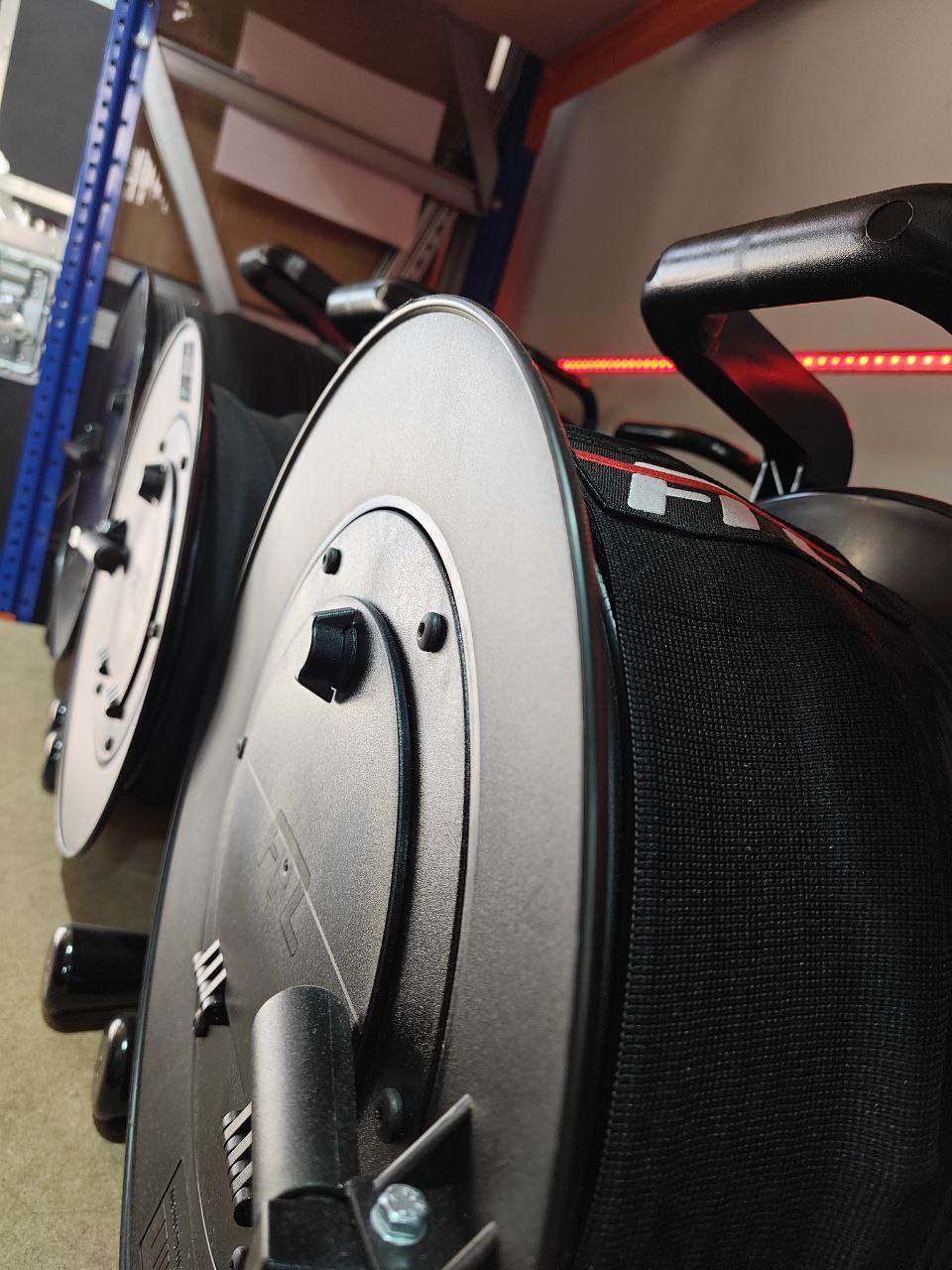
Multimode fibre is the best option when seeking the ideal balance between performance, cost and ease of deployment over short to medium distances. Its broad compatibility with different types of optical transmitters—including SingleMode transceivers when compatible equipment is used—makes it particularly suitable for cable drums and reels with lengths of up to approximately 400–500 m.
Whether used in fixed installations, professional audiovisual events, temporary data networks or compact data centres, OM3 and OM4 fibre provide a robust, reliable and scalable platform capable of meeting the industry’s current requirements.
*Speed and distance limits are theoretical and can be significantly exceeded through high-quality cable manufacturing, connector termination and polishing.
SingleMode fibre (SMF) is designed to allow only one mode of light—a single optical beam—to propagate through its extremely narrow core, approximately 9 microns in diameter. This construction virtually eliminates modal dispersion, enabling signals to be transmitted over very long distances and at extremely high data rates with minimal attenuation.


Designed to operate at typical wavelengths of 1310 nm and 1550 nm, SingleMode fibre supports links of up to 40 km without regeneration, and even greater distances when used with amplified systems such as EDFA or DWDM.
It is the preferred technology for telecommunications, data centres, backbone links and long-distance audiovisual applications.
SingleMode Fibre Specifications
Evolution and Applications of SingleMode Fibre
OS1: Designed for indoor applications using tight-buffered fibre construction. It is suitable for long-distance links that are not exposed to extreme environmental conditions and is commonly used in buildings, equipment racks and optical patch panels.
OS2: Optimised for outdoor use, with reinforced protective layers and greater resistance to temperature variations, moisture and tensile stress. It is the professional choice for permanent installations in large venues, inter-building links and long-distance networks.
Optical Considerations: Chromatic Dispersion and Optical Windows
Unlike multimode fibre, where modal dispersion is the primary challenge, single-mode fibre requires careful control of chromatic dispersion. This phenomenon occurs because different wavelengths travel at slightly different speeds, causing a small broadening of the optical pulse.
For this reason, high-performance single-mode fibre installations should:
Use coherent laser sources, such as DFB or DBR lasers
Select the appropriate optical window—1310 nm or 1550 nm—according to the transmission distance and equipment type
Use APC connectors with an 8° angled polish in sensitive applications to minimise back reflection
Advantages of SingleMode Fibre
✔ Transmission over distances of up to 40 km without noticeable signal loss or regeneration
✔ Compatible with uncompressed video signals and high-bitrate IP networks
✔ Unmatched stability and signal integrity across critical, long-distance links
✔ Ideal for environments with high electromagnetic interference and demanding installations
✔ Lower latency and a superior signal-to-noise ratio
✔ Ready for data rates above 100 Gb/s over a single link and for DWDM technologies
Conclusion
SingleMode fibre is an excellent solution for high-end audiovisual infrastructures where signal quality, transmission distance and stability are the main priorities. Although it requires more precise laser transmitters and rigorous installation practices, its performance in critical environments—such as major events, broadcast studios, racetracks and large venues—makes it the most precise professional choice.
Its use ensures uncompressed signal transmission, low latency, complete immunity to electromagnetic interference and consistent performance, even over decades of service.


Characteristics of MultiMode Fibre Optic
Characteristics of SingleMode Fibre Optic
MultiMode vs SingleMode Fibre Comparison
Practical Comparision: When Should You Use MultiMode or SingleMode Fibre?
The choice between MultiMode and SingleMode fibre depends directly on the operating environment, transmission distance and type of equipment being used.
MultiMode fibre is more cost-effective, easier to install and highly compatible with standard audiovisual equipment. For this reason, it is the preferred option for most fibre cable reels used at events, transmission distances below 500 m, temporary deployments and plug-and-play applications. It supports lower-cost LED or VCSEL transmitters and enables rapid deployment without requiring specialised optical electronics.
By contrast, SingleMode fibre provides greater optical precision and stability when combined with the appropriate laser transmitters and systems specifically designed for its use. It is ideal for long-distance links, extensive permanent installations, connections between technical rooms and environments where signal integrity is critical, including uncompressed video, specialised formats and high-capacity audiovisual IP networks.
Both technologies are fully suitable for professional audiovisual applications. The key is selecting the correct solution for each use case:
Multimode fibre for versatility and efficiency in mobile event applications.
SingleMode fibre for maximum performance in critical or long-distance links.
CONTACT US
© 2025. All rights reserved.
Contact Numbers:
+34 936 275 563 - Office
+34 614 179 965 - Warehouse & Repairs
+34 655 506 188 - Sales & Rental
+34 615 466 711 - Export
+34 670 233 134 - Technical Support